
Soft Wash vs. Pressure Wash: Which One Should You Use?
A plain-English guide from your friendly Tulsa grime-fighters. Updated 2026.
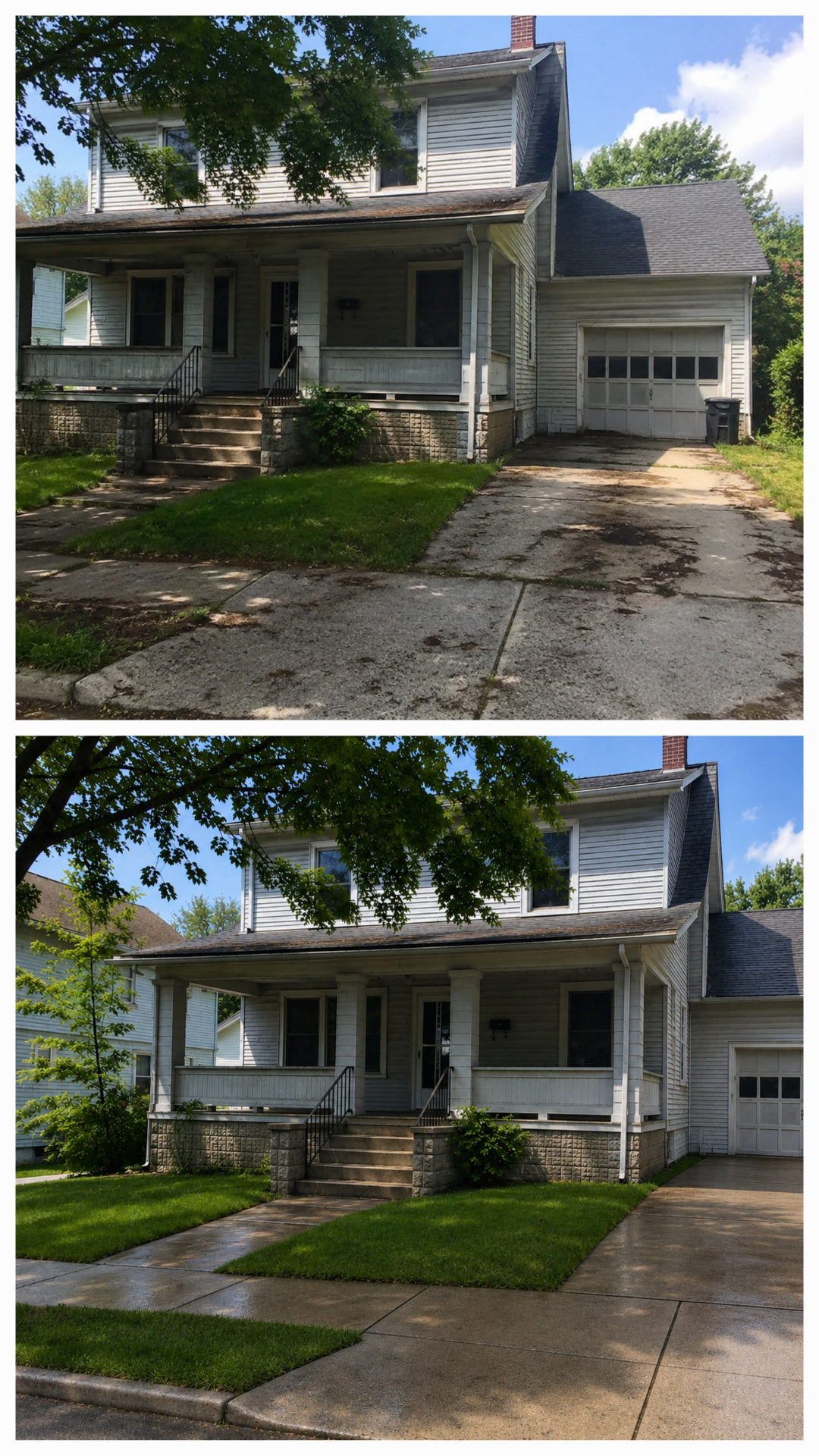
Every week we get some version of the same question: "Can you just blast the whole house with the pressure washer?" The honest answer is no — and the reason is the difference between pressure washing and soft washing. Using the wrong one on the wrong surface is how homeowners end up with stripped paint, torn shingles, or water forced behind their siding.
Here's the short version, then the details.
The 30-second answer
| Surface | Method |
|---|---|
| Concrete driveway / sidewalk | Pressure wash (hot water preferred) |
| Dumpster pad / grease | Pressure wash (hot water) |
| Brick pavers / patio | Pressure wash (medium) |
| Vinyl or painted siding | Soft wash |
| Asphalt shingle roof | Soft wash — always |
| Wood deck / fence | Soft wash (or very low pressure) |
| Stucco | Soft wash |
| Windows & screens | Soft wash / hand rinse |
What is pressure washing?
Pressure washing (sometimes called power washing when hot water is involved) uses a high-pressure stream of water — typically 2,000 to 4,000 PSI — to physically blast grime, gum, tire marks and mildew off a surface. It's fast, satisfying, and perfect for hard, non-porous materials that can take a punch.
Use high pressure on: concrete driveways, sidewalks, curbs, dumpster pads, drive-thru lanes, brick, block, and heavy equipment. If a surface would survive a hailstorm, it can usually survive a pressure washer.
Hot water changes the math. Heat breaks down grease and oil on contact, which is why commercial kitchens and fleet yards get hot-water rigs and residential driveways often don't need harsh chemicals.
What is soft washing?
Soft washing uses low pressure — under about 500 PSI, closer to a garden hose — combined with biodegradable cleaning solutions that kill mold, mildew, algae and lichen at the root. The solution does the cleaning; the water just rinses.
Use soft washing on: asphalt shingle roofs, vinyl and painted siding, stucco, wood decks and fences, screens, and any painted or coated surface. Anything that can be dented, stripped, or forced open by water pressure belongs in the soft-wash column.
Why it matters: black streaks on a roof aren't dirt, they're Gloeocapsa magma — a hardy algae. Blasting them with pressure just knocks off shingle granules (which are the sunscreen for your roof) and the algae grows right back. Soft washing kills it, and the roof stays clean for years.
Common (expensive) mistakes
- Pressure washing a shingle roof. Voids most manufacturer warranties and cuts shingle life in half.
- Blasting vinyl siding at a sharp angle. Forces water behind the panels into insulation and wall cavities.
- Using a turbo nozzle on wood. Etches lines you can't sand out.
- Cold water on grease. You'll just polish it. Hot water or a degreaser is the fix.
- Skipping plant protection. Some soft-wash mixes are hard on shrubs — pros pre-wet and rinse landscaping.
How we decide on every Tulsa job
When Hydro Heroes shows up, the first thing we do is walk the property and match each surface to a method. A typical house wash around Tulsa or Broken Arrow ends up being a hybrid job: soft wash the siding, soffits, and roof; pressure wash the driveway, walkways, and patio. One truck, one visit, right method on each surface.
We run a hot-water rig for the pressure-washing side and low-chemical soft-wash blends for everything delicate. Plants get pre-rinsed. Pets stay inside. Everyone lives.
Not sure which your house needs?
Send a couple of photos with your quote request and we'll tell you straight up what the right method is — even if it's a job you can DIY.